
01
Problem
I wanted a clear buying journey for swimming headphones and control over how the store operates. The experience also needed to extend beyond checkout: getting music onto the headphones should be straightforward.

E-commerce case study
An online store for my own swimming-headphone brand. From product discovery to checkout, order management and getting music onto the headphones.
01
I wanted a clear buying journey for swimming headphones and control over how the store operates. The experience also needed to extend beyond checkout: getting music onto the headphones should be straightforward.
02
I built Splaash a custom storefront and a separate admin panel. The system connects products, a shopping cart, payments, inventory and order processing. Splaash Music supports customers when they start using the headphones.
03
I developed the storefront and admin with SvelteKit and TypeScript, backed by Fastify and PostgreSQL. Stripe handles payments. Verified payment events, inventory reservations and background queues support the order lifecycle.
04
The store is live at uintikuulokkeet.fi. The project connects running my own business with software development: I am responsible for both the customer experience and the services behind it.
The complete product
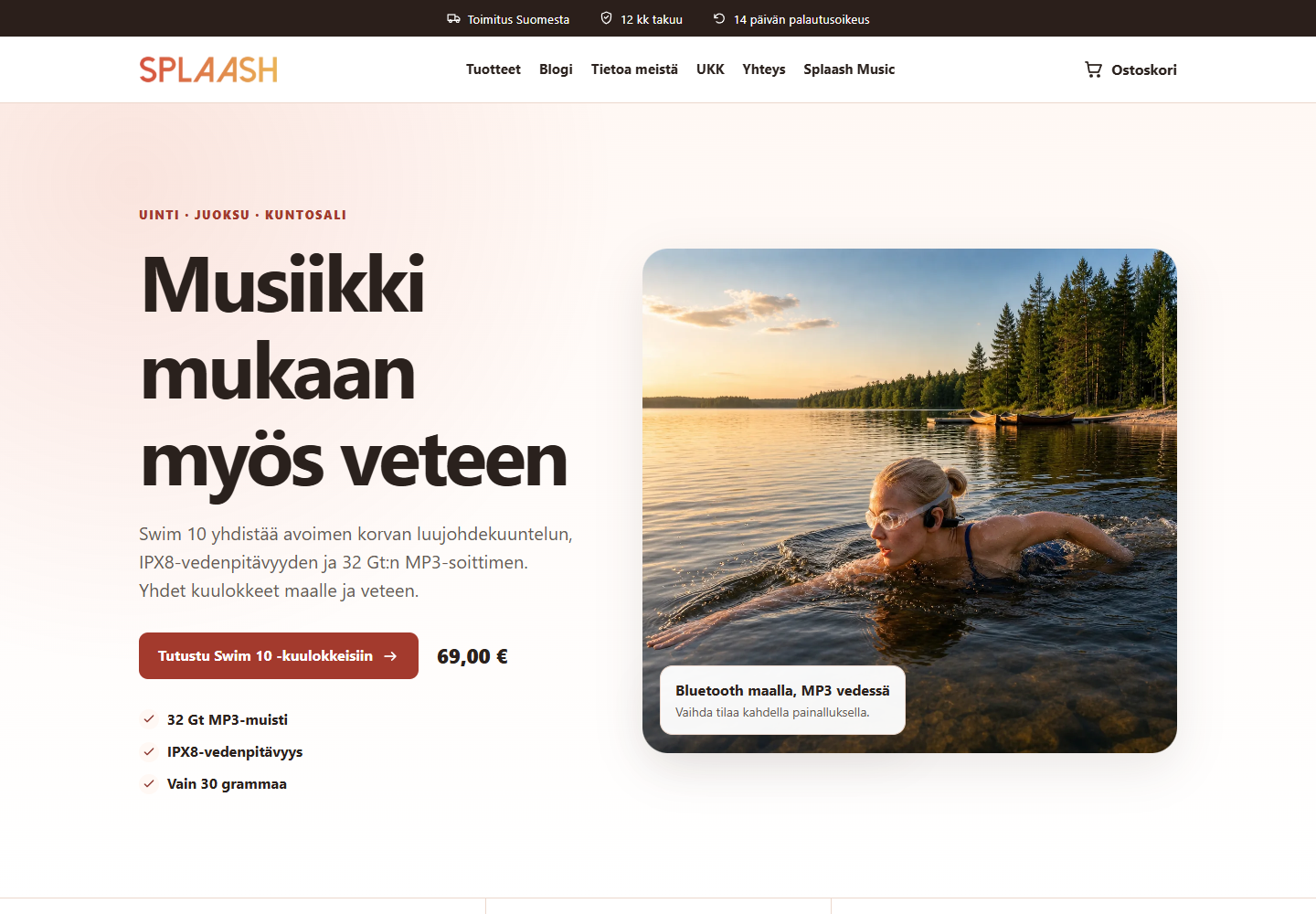
Responsive product pages, a shopping cart and Stripe checkout take customers from discovery to payment.
Products, inventory, orders, shipment tracking and content are managed through one system.
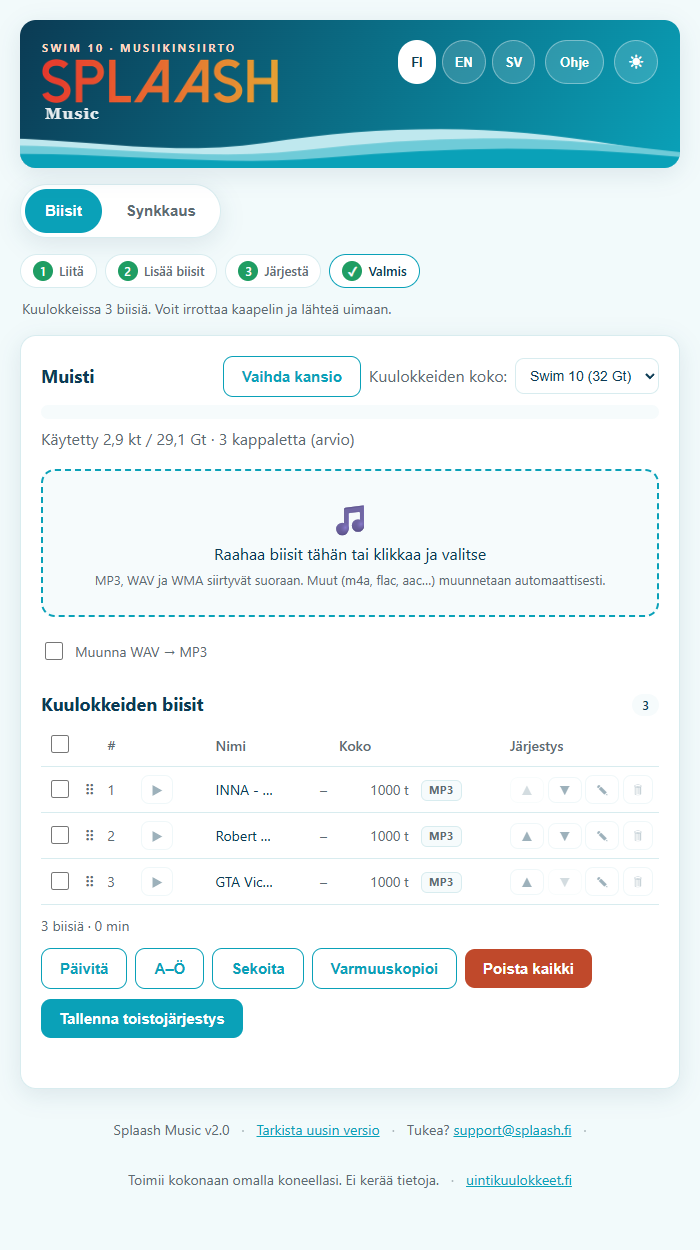
A browser-based music tool helps users import, arrange and transfer tracks to USB headphones.
The interface
The storefront and its companion music tool support two stages of the same product experience.
Under the hood
A custom commerce system where the storefront and admin share the same product and order core.
Implementation details checked against the project source on 7 September 2026.